
Please find more information about the Outbreak of Salmonellosis Linked to Papaya here:
Government Food Alerts
The Idaho Foodbank Recalls Coconut Beverage, Broccoli Cheddar Soup, Eggs, and Cheese Product Because Of Possible Health Risk
The Idaho Foodbank is recalling approximately 27,000 pounds of Coconut Beverage, Broccoli Cheddar Soup, Eggs, and Cheese Product.
These products are being recalled because they were not continuously maintained or stored at the required temperature due …
Bhu Foods Voluntarily Recalls Protein Bars for Possible Health Risk
Hudson Valley Foods, Inc. of Highland, NY has advised Bhu Foods of San Diego, CA that organic sunflower seeds sold to the company have been recalled.
As a result of a recall of sunflower seeds from Hudson Valley Foods, Inc.,Bhu Foods’ supplier of organic sunflower seeds, advised Bhu Foods that ingredients sold to the company have the potential to be contaminated with Listeria monocytogenes.
July 21, 2017 (Initial Announcement) Multistate Outbreak of Salmonella Kiambu Infections Linked to Yellow Maradol Papayas
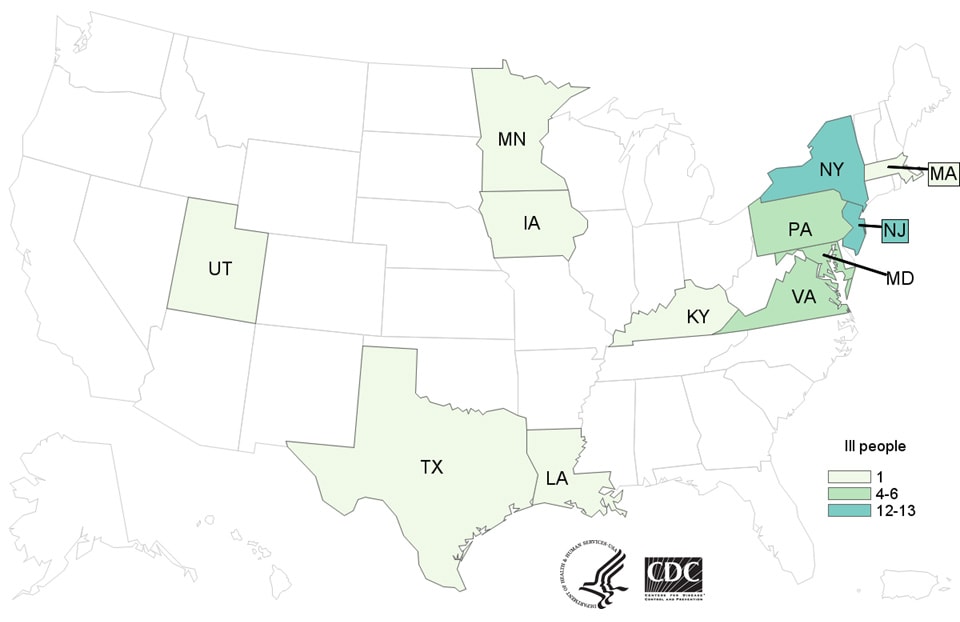
- Read the Advice to Consumers, Restaurants, and Retailers >>
- CDC, public health and regulatory officials in several states, and the U.S. Food and Drug Administration are investigating a multistate outbreak of Salmonella Kiambu infections.
- A total of 47 people infected with the outbreak strain of Salmonella Kiambu have been reported from 12 states.
- Twelve ill people have been hospitalized. One death has been reported from New York City.
- Epidemiologic and laboratory evidence collected to date indicates that yellow Maradol papayas are a likely source of this multistate outbreak.
- CDC recommends that consumers not eat, restaurants not serve, and retailers not sell yellow Maradol papayas until we learn more.
- If you aren’t sure if the papaya you bought is a yellow Maradol papaya, you can ask the place of purchase. Restaurants and retailers can ask their supplier.
- When in doubt, don’t eat, sell, or serve them and throw them out.
- Wash and sanitize countertops as well as drawers or shelves in refrigerators where papayas were stored.
- This investigation is ongoing. CDC will provide updates when more information is available.
July 19, 2017 (Initial Announcement) Human Salmonella Typhimurium Infections Linked to Exposure to Clinical and Teaching Microbiology Laboratories
Read the Advice to Students and Employees Working in Laboratories CDC and public health officials in several states have identified a multistate outbreak of Salmonella Typhimurium infections linked to various clinical, commercial, and teaching microbi…
July 19, 2017 (Initial Announcement) Human Salmonella Typhimurium Infections Linked to Exposure to Clinical and Teaching Microbiology Laboratories
Read the Advice to Students and Employees Working in Laboratories CDC and public health officials in several states have identified a multistate outbreak of Salmonella Typhimurium infections linked to various clinical, commercial, and teaching microbi…
Garden of Light Inc. Recalls Woodstock Organic Matcha Vanilla Oats Because of Possible Health Risk
Garden of Light, Inc. dba Gluten Free Solutions of East Hartford, CT, is voluntarily recalling the Woodstock Organic Matcha Vanilla Oats, 1.8 oz. which is manufactured by Garden of Light for Blue Marble Brands. The product has the potential to be conta…
Bestherbs Coffee LLC Issues Voluntary Nationwide Recall of New Kopi Jantan Tradisional Natural Herbs Coffee due to the Presence of Undeclared Active Pharmaceutical Ingredients and Undeclared Milk
Grand Priarie, TX, Bestherbs Coffee LLC is voluntarily recalling all lots of New of Kopi Jantan Tradisional Natural Herbs Coffee, 13 grams to the consumer level. FDA laboratory analysis confirmed the presence of desmethyl carbodenafil. Desmethyl carbo…
Texas Legend Foods Issues Allergy Alert on Undeclared Cheese, Milk & Egg in “Silver Star Chipotle Dip”
Texas Legend Foods of Austin, TX, is recalling its 16 ounce jars of Silver Star Chipotle Queso Dip because they contain undeclared cheese, milk and eggs. People who have allergies to cheese, milk and eggs run the risk of a serious or life-threatening a…
August 2, 2017 (Investigation Update) Multistate Outbreak of Multidrug-Resistant Salmonella Heidelberg Infections Linked to Contact with Dairy Bull Calves

- Read the Advice to Calf Handlers and Veterinarians »
- Read the Information for Health Care Providers »
- CDC, several states, and the U.S. Department of Agriculture’s Animal and Plant Health Inspection Service (USDA-APHIS) are reopening the investigation of a multistate outbreak of multidrug-resistant Salmonella Heidelberg infections.
- Ten more people infected with the outbreak strains of Salmonella Heidelberg have been reported since March 20, 2017, when CDC closed the outbreak investigation.
- Whole genome sequencing on clinical samples from ill people showed a close genetic relationship between the bacteria that sickened people after March 20, 2017, and the bacteria that sickened people before that time. This means that people in both groups were more likely to share a common source of infection and that this outbreak is ongoing.
- A total of 46 people infected with the outbreak strains of Salmonella Heidelberg have been reported from 14 states.
- 14 (30%) people have been hospitalized. No deaths have been reported.
- Illnesses started on dates ranging from January 27, 2015 to July 11, 2017.
- 15 (33%) people in this outbreak are children under the age of 5.
- Epidemiologic and laboratory investigations linked ill people in this outbreak to contact with calves, including dairy bull calves. Dairy bull calves are young, male cattle that may be raised for meat.
- In interviews, ill people answered questions about contact with animals and foods eaten in the week before becoming ill. Of the 44 people interviewed, 29 (66%) reported contact with dairy bull calves or other cattle. Some of the ill people interviewed reported that they became sick after their dairy bull calves became sick or died.
- Ongoing surveillance in veterinary diagnostic laboratories showed that calves in several states continued to get sick with the outbreak strain of multidrug resistant Salmonella Heidelberg after reports of illnesses in people had stopped. ?
- Information collected earlier in the outbreak indicated that most of the calves came from Wisconsin. Regulatory officials in several states are now tracing the origin of the calves that are linked to the newer illnesses.
- Antibiotic-resistance testing conducted by CDC on clinical isolates from ill people shows that the isolates were resistant to multiple types of antibiotics.
- Antibiotic resistance may be associated with increased risk of hospitalization, development of a bloodstream infection, or treatment failure in patients.
- Whole genome sequencing has identified multiple antimicrobial resistance genes in outbreak-associated isolates from 33 ill people, 65 cattle, and 11 from animal environments. This correlates with results from standard antibiotic resistance testing methods used by CDC’s National Antimicrobial Resistance Monitoring System (NARMS) laboratory on clinical isolates from eight ill people in this outbreak.
- The eight isolates tested were susceptible to gentamicin, azithromycin, and meropenem. All eight were resistant to amoxicillin-clavulanic acid, ampicillin, cefoxitin, ceftriaxone, streptomycin, sulfisoxazole, and tetracycline, and had reduced susceptibility to ciprofloxacin. Seven isolates were also resistant to trimethoprim-sulfamethoxazole. Five were also resistant to nalidixic acid. Three were also resistant to chloramphenicol.
- Follow these steps to prevent illness when working with any livestock:
- Always wash your hands thoroughly with soap and water right after touching livestock, equipment, or anything in the area where animals live and roam. Use dedicated clothes, shoes, and work gloves when working with livestock. Keep and store these items outside of your home.
- It is especially important to follow these steps if there are children under age 5 in your household. Young children are more likely to get a Salmonella infection because their immune systems are still developing.
- Work with your veterinarian to keep your animals healthy and prevent diseases.
- This investigation is ongoing and we will provide updates as more information becomes available. Livestock owners should continue to watch for increased sicknesses in dairy calves and consult their veterinarian if needed.
