
Today, Garden of Life, LLC, is issuing a voluntary precautionary recall of its new supplement for infants, Baby Organic Liquid, because the product, as labeled, includes directions for use that may be misinterpreted. The company is concerned that if no…
Government Food Alerts
Product Recall By Wegmans Of Assorted Muffins 4 Pack
The assorted muffin four pack may include a banana nut muffin containing walnuts, an allergen not listed on the label. People who have an allergy or sensitivity to nuts should not consume this product.
Country Fresh Orlando LLC, Recalls Product Because of Possible Health Risk
Country Fresh Orlando, LLC. of Orlando, Florida, is recalling 5,999 cases of diced bell pepper, vegetable kabobs, and creole and fajita mixed diced vegetables (product descriptions attached), because they have the potential to be contaminated with List…
Wakefern Food Corp. Voluntarily Recalls ShopRite Semi-Sweet Real Chocolate Chips
Wakefern Food Corp. has initiated a voluntary recall of its ShopRite brand Semi-Sweet Real Chocolate Chips. The chips were sold in 24 oz. bags bearing a UPC bar code of 041190 02668 and Best if Used By dates of April 11, 2019 and April 12, 2019.
September 1, 2017 (Investigation Update) Multistate Outbreak of Salmonella Infections Linked to Imported Maradol Papayas
- Read the Advice to Consumers, Restaurants, and Retailers >>
- CDC, public health and regulatory officials in several states, and the U.S. Food and Drug Administration are investigating a multistate outbreak of Salmonella infections.
- This outbreak includes four different types of Salmonella: Thompson, Kiambu, Agona, and Gaminara. The same strain of these types of Salmonella were found in samples collected from papayas and from ill people.
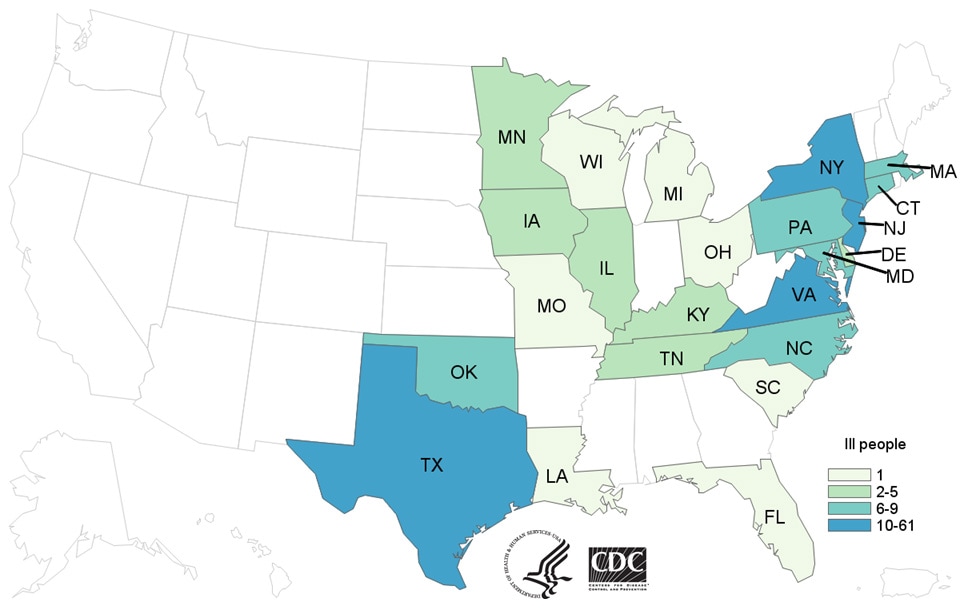
- A total of 201 people infected with the outbreak strains of Salmonella Thompson (131), Salmonella Kiambu (57), Salmonella Agona (8), or Salmonella Gaminara (5) have been reported from 23 states.
- Sixty-five ill people have been hospitalized. One death was reported from New York City.
- Epidemiologic and laboratory evidence indicates that Maradol papayas from the Carica de Campeche farm in Mexico are the likely source of this multistate outbreak.
- Two additional outbreaks of Salmonella infections linked to imported papayas from two other farms in Mexico, Caraveo Produce and El Zapotanito, have been identified. Available information indicates that illnesses in these two outbreaks are not linked to papayas from the Carica de Campeche farm and are being investigated separately.
- CDC recommends that consumers not eat, restaurants not serve, and retailers not sell Maradol papayas from the Carica de Campeche, Caraveo Produce, or El Zapotanito farms in Mexico.
- If you aren’t sure if the papaya you bought is a Maradol papaya from one of these farms, ask the place of purchase. Restaurants and retailers can ask their suppliers.
- When in doubt, don’t eat, sell, or serve papayas; just throw them out.
- Wash and sanitize countertops as well as drawers or shelves in refrigerators where Maradol papayas were stored.
- Because three separate outbreaks linked to papayas from different farms have been identified, CDC is concerned that papayas from several other farms in Mexico might be contaminated with Salmonella and have made people sick.
- FDA continues testing papayas from Mexico to see if other papayas from other farms are contaminated with Salmonella. Investigations are ongoing to determine if additional consumer warnings are needed beyond the advice not to eat papayas from specific farms that is given in this update. CDC will provide updates when more information is available.
September 1, 2017 (Investigation Update) Multistate Outbreak of Salmonella Infections Linked to Imported Maradol Papayas
- Read the Advice to Consumers, Restaurants, and Retailers >>
- CDC, public health and regulatory officials in several states, and the U.S. Food and Drug Administration are investigating a multistate outbreak of Salmonella infections.
- This outbreak includes four different types of Salmonella: Thompson, Kiambu, Agona, and Gaminara. The same strain of these types of Salmonella were found in samples collected from papayas and from ill people.
- A total of 201 people infected with the outbreak strains of Salmonella Thompson (131), Salmonella Kiambu (57), Salmonella Agona (8), or Salmonella Gaminara (5) have been reported from 23 states.
- Sixty-five ill people have been hospitalized. One death was reported from New York City.
- Epidemiologic and laboratory evidence indicates that Maradol papayas from the Carica de Campeche farm in Mexico are the likely source of this multistate outbreak.
- Two additional outbreaks of Salmonella infections linked to imported papayas from two other farms in Mexico, Caraveo Produce and El Zapotanito, have been identified. Available information indicates that illnesses in these two outbreaks are not linked to papayas from the Carica de Campeche farm and are being investigated separately.
- CDC recommends that consumers not eat, restaurants not serve, and retailers not sell Maradol papayas from the Carica de Campeche, Caraveo Produce, or El Zapotanito farms in Mexico.
- If you aren’t sure if the papaya you bought is a Maradol papaya from one of these farms, ask the place of purchase. Restaurants and retailers can ask their suppliers.
- When in doubt, don’t eat, sell, or serve papayas; just throw them out.
- Wash and sanitize countertops as well as drawers or shelves in refrigerators where Maradol papayas were stored.
- Because three separate outbreaks linked to papayas from different farms have been identified, CDC is concerned that papayas from several other farms in Mexico might be contaminated with Salmonella and have made people sick.
- FDA continues testing papayas from Mexico to see if other papayas from other farms are contaminated with Salmonella. Investigations are ongoing to determine if additional consumer warnings are needed beyond the advice not to eat papayas from specific farms that is given in this update. CDC will provide updates when more information is available.
Dedinas Franzak Enterprises Issues Allergy Alert On Undeclared Milk In “Butter Flavored Popcorn”
Dedinas Franzak Enterprises of Grand Rapids, MI, is recalling several brands of butter flavored popcorn because they may contain undeclared milk. People who have allergies to milk run the risk of serious or life-threatening allergic reaction if they co…
Rajbhog Distributors GA Inc. Issues Allergy Alert on Undeclared Almonds in JALEBI
Rajbhog Distributors GA. Inc. of Tucker GA-30084 is recalling 1467 packets of Jalebi because it may contain undeclared Almond pcs. People who have an allergy or severe sensitivity to Almonds run the risk of serious or life- threatening allergic reacti…
August 29, 2017 (Initial Announcement) Multistate Outbreak of Salmonella Agbeni Infections Linked to Pet Turtles
CDC and multiple states are investigating a multistate outbreak of human Salmonella infections linked to contact with pet turtles. Thirty-seven people infected with the outbreak strain of Salmonella Agbeni have been reported from 13 states. …
August 29, 2017 (Initial Announcement) Multistate Outbreak of Salmonella Agbeni Infections Linked to Pet Turtles
CDC and multiple states are investigating a multistate outbreak of human Salmonella infections linked to contact with pet turtles. Thirty-seven people infected with the outbreak strain of Salmonella Agbeni have been reported from 13 states. …
